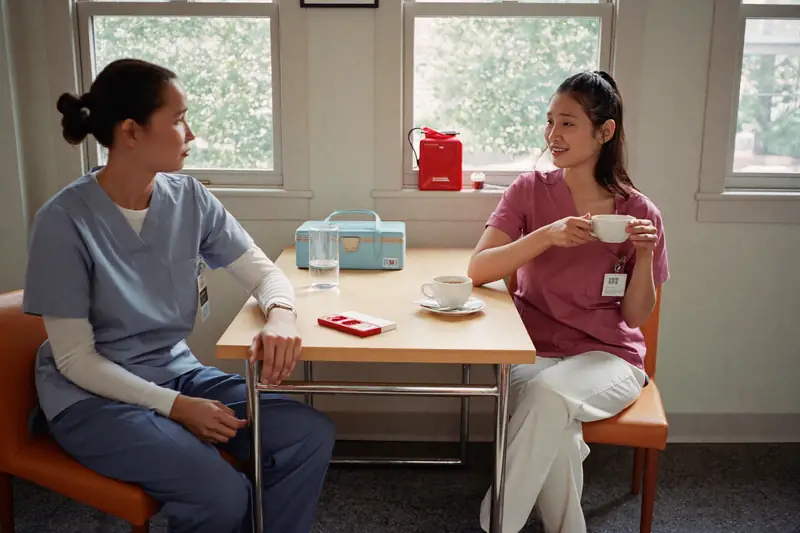
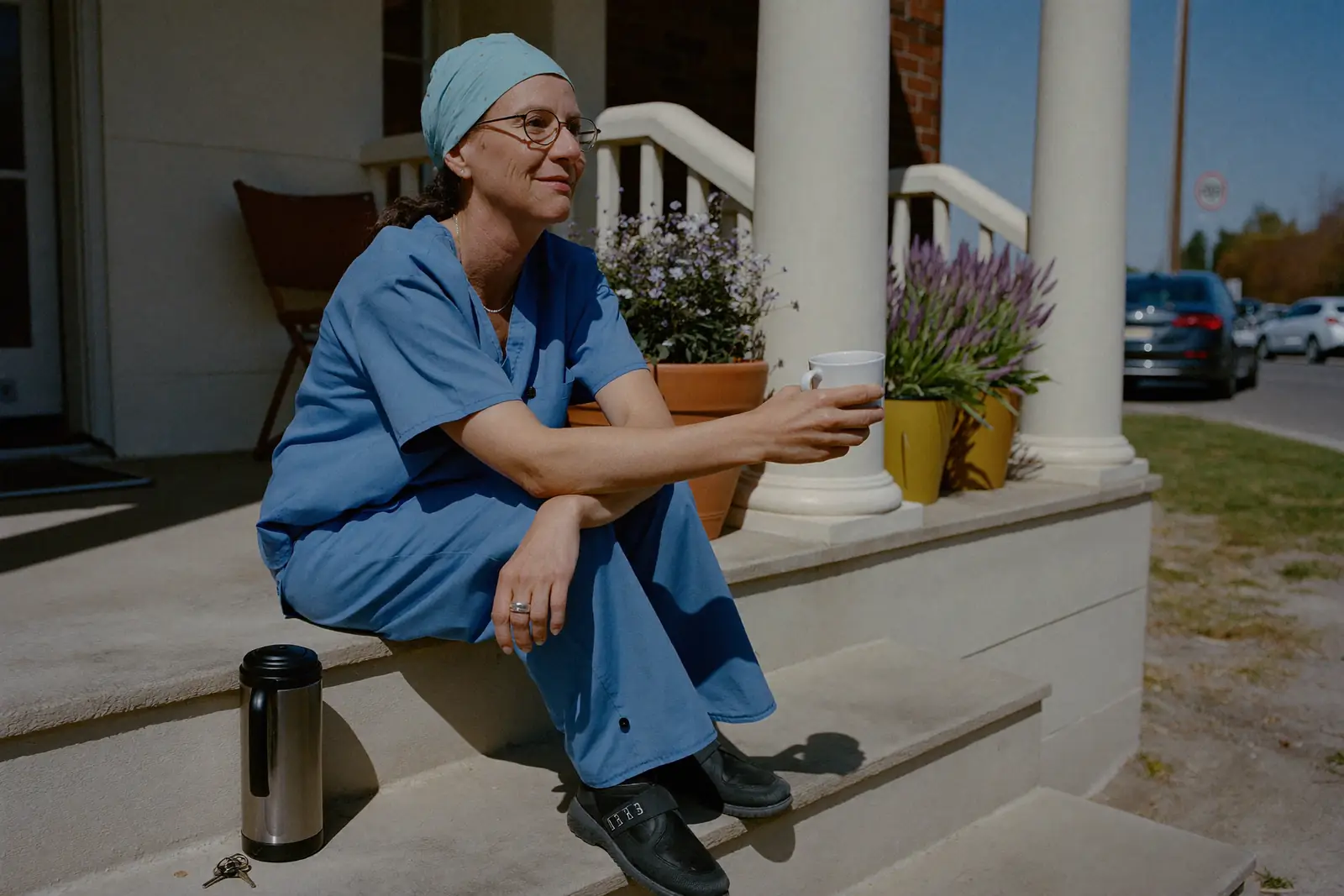
The short answer
It might be, if you stay steady when you don't know what's coming and you like quick decisions. The ER is not a faster version of floor nursing, and the adrenaline is only part of it. The right specialty uses what you're already good at, so match the ER's pace to how you work best.

RN jobs open now
- Registered Nurse - PT Days, Kindred Hospital Westminster, Westminster, CA, $55/hr
- Registered Nurse I (New Graduate Nurse) - Heart and Kidney Unit (March 2027 Start), Children's National Hospital, United States, $39–$60
- Registered Nurse (RN), Adolescent Psychiatry - DECEMBER GRADS WELCOME!, Cincinnati Children's, College Hill, TX, $34–$40


That's what ER nursing is really like, right?
No. Real ER nursing is a lot less glamorous, but a lot more interesting. Here's what it actually looks like, and how to tell if you'd thrive there.
What the ER Is and What It's Not
The ER is not a faster version of floor nursing. The whole model of care is different.
On a med-surg floor, your job is to care for patients while they recover. In the ER, your job is to decide who is really sick, and find out what's wrong fast enough to keep them alive, stabilize them, and send them on their way to the right unit.
You're usually not the one who fixes it.
Here's a real example. A patient walks in with chest pain. In the ER, you’re working backwards. You start with the most dangerous possibility and work down until you can safely rule each one out.
Is this an MI? A blood clot in the lungs? An aortic dissection? Sometimes the answer is reflux, but you still have to start from the worst case, because that's the job.
But What About the Adrenaline?
It's real. There will be traumas, codes, and shifts you'll still be thinking about years later, or decades later in my case.
Most shifts look more like this, though:
Room 4 has abdominal pain and is waiting on a CT. Room 9 had admission orders six hours ago and is still waiting on a bed upstairs. Room 12 is a behavioral health hold who's been in the department since Sunday, and the waiting room is full of people with bumps and bruises, coughs, and colds.
When I started as a new RN, I spent my first few months in Fast Track: sprains, pulled muscles, and sore throats. Every so often, a "bronchitis" turns out to be a pulmonary embolism. That's the ER. Most of it is routine until it isn't, and your job is to catch the one that isn't.
If the adrenaline is the only reason you want the ER, you might get frustrated by the "everyday emergencies": the kidney stones, the UTIs, the lacerations, and the medication refills at 3 a.m.
Signs the ER Might Be a Place for You
- You might be a good fit if unpredictability gives you energy. You get bored easily, and walking into a shift with no idea what's coming sounds like fun.
- If you make fast calls under pressure. You'll probably replay some of them on the drive home, but in the moment, you act.
- If you can handle people at their worst: people who are scared, in pain, or intoxicated, and you can set a boundary with any of them and still be kind.
- If you'd rather know a little about everything than everything about one thing, and you're comfortable treating the symptom in front of you before anyone knows what's causing it.
- It also helps if you like collaborating with a lot of different people: Lab, radiology, respiratory, pharmacy, social work, EMS, and whichever specialist comes down to see your patient.
If most of that sounds like you, the ER might be worth a serious look.
Signs It Might Not Be the Right Fit
Most articles about picking a specialty skip this part, but I think it might actually matter more.
- You need continuity to feel like you made a difference. Watching a patient improve over a few days, getting to know them, seeing them walk out the door. If that's where your sense of purpose comes from, the ER can leave you feeling empty.
- Hard shifts follow you home and stay for days. Research finds high rates of compassion fatigue among ER nurses. The pace rarely leaves room to process one hard patient before the next one comes
- Getting yelled at wrecks the rest of your day. Nurses shouldn’t be yelled at (that’s another article for another day), but it happens often enough in the ER because people are often at their worst.
- Shift work doesn't fit your life. Nights, weekends, and holidays and on-call come with many ER jobs, and the newest hires often get the least control over their schedule.
- You want to go deep or be an expert in one particular field. The ER will make you broad long before it lets you go deep.
Still not sure which side you're on? Think back to a moment at your current job or in clinicals when everything went sideways at once. A rapid response, a patient who went downhill fast. Did it sharpen you or spiral you?
That answer can really tell you a lot.
The Right Specialty Uses What You're Already Good At
If the ER sounds like you, you might give it a try.
If it doesn't, you can check one area off your list. Just knowing that can be worth more than a year spent trying to fit somewhere that isn’t meant for you.
Leaning toward yes? Before you apply anywhere, read How to Pick Your First ER Job as a New Grad. Click Here
References
- Pan, Y., Wang, X., & Jin, W. (2025). Risk of compassion fatigue among emergency department nurses: A systematic review and meta-analysis. BMC Emergency Medicine. https://doi.org/10.1186/s12873-025-01314-9
Questions nurses ask
What is ER nursing really like?
It's not floor nursing sped up. You meet patients when nobody knows yet what's wrong, work it out, stabilize them and hand them on. The adrenaline is real, but most of the job is steady assessment and teamwork.
How do I know if a nursing specialty is right for me?
Look at what you're already good at and what wears you out. The right specialty uses your strengths, so weigh the signs a unit fits you against the signs it doesn't before you choose.