The short answer
By working where she might land. She took a nursing assistant job before nursing school, sat the NCLEX early through her school's program, and was eased into the emergency department. She wasn't looking for the ED. Sometimes you don't pick your specialty; it picks you.

RN jobs open now
- Registered Nurse - PT Days, Kindred Hospital Westminster, Westminster, CA, $55/hr
- Registered Nurse I (New Graduate Nurse) - Heart and Kidney Unit (March 2027 Start), Children's National Hospital, United States, $39–$60
- Registered Nurse (RN), Adolescent Psychiatry - DECEMBER GRADS WELCOME!, Cincinnati Children's, College Hill, TX, $34–$40


Ten years earlier, I didn't even know what a code button was. I was 18, right out of high school, and my plan was simple: get through nursing school and figure out the rest later.
The Emergency Department wasn't anywhere on my list.
How It Started
The summer before nursing school, I sent a general application for a nursing assistant job to two local hospitals. Then I waited. When my phone finally rang, it was the Emergency Department.
It was my first "big girl" job interview and my first real step into the world of healthcare. I hadn't prepared for half the questions they asked.
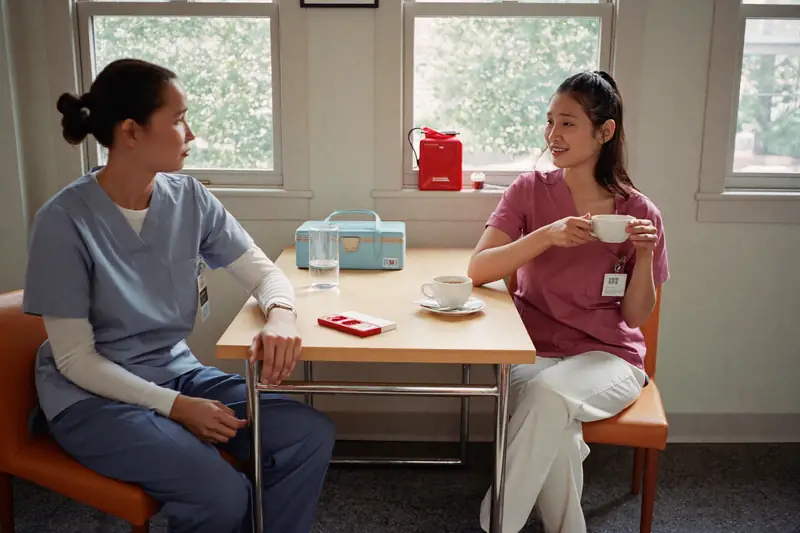
Somehow I made it through the interview and they wanted to hire me. Before I knew it, I was signing paperwork and putting on a pair of blue scrubs.
For the next three years, I worked about 20 hours a week. Squeezing that into a packed nursing school schedule wasn't easy, but it gave me something my classes couldn't: it made the textbook real.
When my instructor went over the signs of DKA, I didn't have to memorize "fruity breath." I could smell it. So by the time clinicals came around, talking with patients and caring for them felt natural. I'd been doing it for years.
The Part Nobody Tells You About
My nursing school trialed a program that allowed students who met RN licensure requirements to take the NCLEX before their senior year of BSN classes. (Spoiler alert: it didn’t last.)
After the test, I hid.
I lay in bed, fairly sure I had failed, ignoring everyone’s calls. I wasn't scared of retaking it. I was actually more scared that my coworkers, the ones who had watched me grow up in that ER for three years, wouldn't trust me as a nurse.
A few weeks later, I pinned on the badge I'd wanted for so long: "Cailey, RN."
But here's the part nobody prepares you for. I went back to the same ER where I'd been a nursing assistant, and suddenly I was the nurse. It was challenging to sort out my priorities. I couldn't believe anyone actually trusted me with a patient.
But my preceptors carried me through it. They believed in me before I believed in myself.
What Hooked Me
Thankfully, they eased me in. After orientation, I spent my first few months in the "Fast Track," seeing patients with coughs, colds, sprains, and pulled muscles. Every so often, what first looked like bronchitis turned out to be a pulmonary embolism, or a patient with shoulder pain had an elevated troponin.
Those cases were rare, but they gave me a taste of the adrenaline that was coming.
A few months later, I moved into the main ED.
Some parts felt familiar across nursing: trying to keep charting up to date, comforting patients, and, on busy shifts, struggling to get a meal or a bathroom break.
But what hooked me was the unknown. No two shifts looked the same. Every time someone pulled the code button, the radio buzzed with an incoming patient, or someone ran into triage yelling for help, my pulse picked up. And I liked it.
In one hour, I might triage and transport a woman in preterm labor, start an IV on a dehydrated 5-month-old, work with a social worker on a plan for a patient in our mental health pod, and push adenosine to try to convert a patient out of SVT. I never knew what was coming next, and I loved that.
There were hard days too. I sat through my share of debriefs after critical incidents, including codes where we didn't get the patient back. Those sessions gave us room to talk through what we could do better and to sit with what we were feeling. Some of those patients changed me.
Some shifts left me running on empty, physically and emotionally. Every nurse on every unit learns how to carry the hard parts of the job. In the ED, I learned to carry mine.
After several years in the ED, I studied for and passed my Certified Emergency Nurse (CEN) exam. BCEN's large-scale research links CEN certification to expertise and career success, and I felt that for myself. I was proud of what I knew, and proud of the care I was giving my patients.
I still had so much to learn. But for the first time, I felt like a real ED nurse.
Maybe You Don't Pick It. Maybe It Picks You.
I wasn't looking for the ED. It found me, and it turned out to be exactly where I belonged.
Maybe you already know where you belong in nursing. Maybe you don't yet, and that's fine. Every nurse gets there differently.
The ED is fast. Not just busy fast. Even when things seem routine, the next patient can change the whole shift. You walk in and you have no idea what's coming through the door. You're there to recognize what could be dangerous, work with the team to evaluate and treat it, and help the patient get to the next step in their care. There's not always resolution in the ED.
You're also a connection point between the doctor, the specialist, the lab, the family in the waiting room, and the floors expecting the patient upstairs. You're coordinating care alongside the IV you're starting and the chart you still haven't finished yet. And you have to make nursing decisions quickly, often before the picture is totally clear.
I had to be tough without losing my ability to empathize. Hold space for someone in the worst moment of their life and then walk back to my other patients. That mix isn't for everyone.
So how do you know if it's for you? Could you go from a sprained ankle to a code in five minutes and back again? Can you stabilize someone and hand them off and never find out what happened?
If you're nodding, or if you're still not sure, I wrote a whole article to help you figure it out. Read Is ER Nursing Right for You? next. It's the conversation I probably needed before I walked through those doors at 18.
And that's another story.
Questions nurses ask
How do I figure out which nursing specialty is right for me?
Spend time on the unit before you commit. A tech or nursing assistant job shows you what the work is really like, and you may find a specialty you weren't looking for.
Can working as a nursing tech help me become an ER nurse?
It can. A tech job puts you on the unit, lets the team see how you work and teaches you the pace before you're licensed. That's how this nurse moved into the ER.