
9 nursing jobs in Bethel, AK
Located 400 air miles west of Anchorage, Bethel is the healthcare hub for 56 tundra villages. Your eight-minute commute passes homes elevated on pilings above permafrost. Practicing here means deep Yup'ik cultural immersion at the Yupiit Piciryarait Cultural Center, crossing Pinky’s Park’s wooden boardwalk, and cheering the midwinter Kuskokwim 300 sled dog race.
Find a nursing job in Bethel
Hiring here: Yukon-Kuskokwim Health Corporation (3) · Healthforce (2) · CENTSTONE SERVICES LLC (1) · CENTSTONE SERVICES LLC (1) · DayToDay Health (1) · EDGEGLOBAL (1)

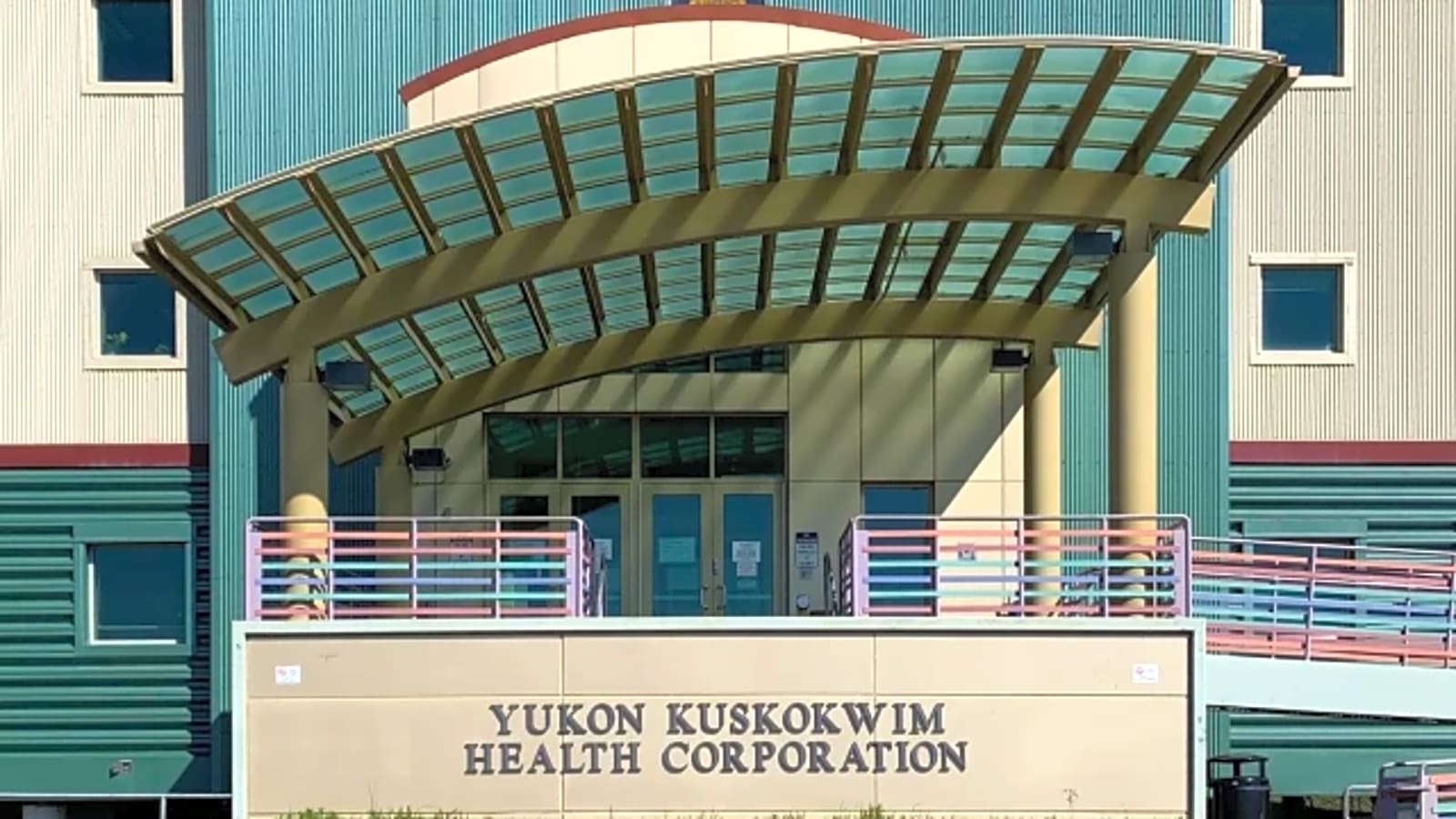
Yukon-Kuskokwim Health Corporation
3 open roles · Per Diem
Yukon-Kuskokwim Health Corporation
3 open roles · Per Diem
- RN
- Travel contract
- ADN accepted
Registered Nurse Care Manager - Clinical Diabetes Educator; $30,000 Sign On, $15,000 Relocation, and Retention Bonus eligible
Bethel, AK
From $55/hr
- Sign-on bonus
- RN
- New grads welcomed
- ADN accepted
Registered Nurse Charge Nurse - Outpatient; *, $15,000 Relocation and Retention Bonus Eligible
Bethel, AK
$53/hr
- Sign-on bonus
- RN

- RN
- Travel contract
- RN
- Day shift
- ADN accepted

Registered Nurse - Medical / Surgical
$2,432/week
- RN
- Rotating shift
- Agency contract

Travel Licensed Practical Nurse Long Term Care Job
$1,296–$1,364/week
- New grads welcomed · reported
- LPN
- Travel contract
Registered Nurse Outpatient
$2,400–$2,640/week
- RN
- Day shift
- Travel contract
Travel Registered Nurse Ambulatory Care
$2,586–$2,786/week
- RN
- Travel contract
Working and living in Bethel
· 9 open roles
Living costs
- Median gross rent
- $1,678/mo
- Rent and tenant-paid utilities
- Median household income
- $117,255/yr
- All local households, not nurse pay
New to our board this week
0 current postings first appeared here in the past seven days.
Credentials accepted
- RN8
- LPN1
One posting may accept more than one credential.
Shifts listed
- Days2
- per-diem2
- Rotating1
Postings may list several shifts or leave the shift unspecified.
Living in Bethel
Located on the Kuskokwim River 400 air miles west of Anchorage, Bethel is the primary commercial and healthcare hub for 56 surrounding villages across the Yukon-Kuskokwim Delta.
More about life hereShow less
For a relocating nurse, practicing here offers an immersive experience at the center of rural Alaskan healthcare. Life operates off the standard road network: commutes average under ten minutes, with many clinicians walking or taking local cabs along tundra roads.
Daily life is infused with Yup'ik culture, from qaspeq sewing and subsistence salmon harvesting to community gatherings at the Yupiit Piciryarait Cultural Center, the Cama-i Dance Festival, and the prestigious Kuskokwim 300 Sled Dog Race. Time outdoors is defined by the surrounding 20-million-acre Yukon Delta National Wildlife Refuge and the tundra boardwalk at Pinky's Park.
Tradeoffs are genuine: fresh produce is scarce outside of Meyer's Farm and seasonal markets, dining options like Dmitri's Restaurant lean heavily on staples, winter brings intense darkness and cold, and flights are required to leave town. Nurses who thrive here embrace adventure, adapt to village logistics, and value profound community service.
Sources
Neighborhoods
Rather than formal municipal neighborhoods, Bethel is arranged as a compact rural hub where residential life clusters between the Kuskokwim riverfront, the regional hospital complex, and arterial tundra gravel corridors. Homes and modular residential properties are distributed along streets such as Ayaginar Drive, Blackberry Street, and 1st Avenue.
Because the town is built on permafrost and marshy tundra, most residential housing consists of single-family structures and multi-unit buildings elevated on pilings. Given Bethel's small geographic footprint, almost all residential pockets sit within a few minutes of medical facilities, making any location practical for hospital shift workers.
Sources
Housing
Housing in Bethel is specialized and inventory is limited across the board. Because homes must contend with shifting permafrost, structures are built on heavy wooden or steel pilings above the tundra moss.
The housing stock consists primarily of modest single-family dwellings and basic multi-unit apartment complexes scattered along roads like Ayaginar Drive. Due to tight housing availability across the bush hub, many medical workers rely directly on employer-provided or subsidized healthcare housing rather than navigating the open rental market.
Sources
Getting around
Commutes in Bethel are remarkably brief, typically averaging between eight and ten minutes. While the majority of workers drive personal vehicles, nearly a fifth of the community walks to work, reflecting the town's dense core and high walk-to-work culture.
Bethel is disconnected from the contiguous Alaska road system and is accessible only by air or water, so road transit is limited to local driving, walking, or utilizing the town's active local taxi cab fleet. Public bus transit is virtually nonexistent, but short distances mean hospital staff encounter none of the highway congestion found in larger urban centers.
Food and dining
Bethel's dining landscape is functional and straightforward rather than culinary-driven. Dmitri's Restaurant serves as a longtime local fixture for sit-down lunches and dinners, complemented by several casual eateries and town takeout spots that offer prompt home delivery.
Due to remote supply chains, menus emphasize canned, fried, and shelf-stable ingredients, making fresh produce rare at standard restaurants. For fresh greens and root vegetables, locals turn to seasonal harvests from Meyer's Farm and the community-run Bethel Farmers Market.
Sources
Outdoors
Bethel is encircled by the 20-million-acre Yukon Delta National Wildlife Refuge, the country's largest wildlife refuge, renowned for massive spring waterfowl migrations, tundra swans, and shorebird nesting. Within the community, Pinky's Park offers a two-mile elevated wooden boardwalk that allows residents to walk and jog across the otherwise impassable wet tundra.
Outdoor life centers heavily on the Kuskokwim River and nearby waters like the Kisaralik River, where locals pursue salmon fishing, waterfowl hunting, berry picking, kayaking, and winter sled dog mushing.
Sources
Arts and culture
Bethel's cultural heartbeat is deeply anchored in Yup'ik heritage, with over two-thirds of the population identifying as Alaska Native and traditional languages actively spoken. The Yupiit Piciryarait Cultural Center serves as the artistic and civic anchor, housing museum exhibits of Native artifacts, the town public library, dance classes, and community concerts.
Major annual traditions include the midwinter Kuskokwim 300 Sled Dog Race (K300) and the Cama-i Dance Festival, while evening entertainment includes films at Suurvik Cinema at Kipusvik.
Sources
Seasons and weather
The subarctic tundra climate brings long, frigid winters defined by heavy snow cover, sub-freezing temperatures, frozen waterways, and limited daylight hours that test newcomer endurance. Midwinter transforms the frozen Kuskokwim River into an active ice road and mushing corridor.
Summers are brief and mild, bringing continuous daylight and blooming tundra, though thawing permafrost turns the surrounding ground spongy and wet, making boardwalks and rubber boots essential.
Sources
For families
Bethel provides a rooted, supportive environment for families seeking a close community immersed in rich Alaska Native tradition. Public education is administered through the Lower Kuskokwim School District, which serves the city alongside dozens of outlying delta villages.
Community amenities for children include a municipal exercise gym with a three-lane swimming pool, youth reading programs at the public library inside the Yupiit Piciryarait Cultural Center, and the playground and boardwalk at Pinky's Park. However, formal childcare options and specialized adolescent programming remain limited compared to larger urban centers.
Sources
What locals say
Residents describe Bethel as an exceptionally welcoming, tight-knit, and resilient hub with deep community bonds, unique multi-generational culture, and a distinct affection for local village dogs. Medical professionals appreciate the profound sense of purpose that comes with serving dozens of remote regional villages.
However, locals are candid about the steep tradeoffs: extreme isolation 400 air miles from Anchorage, heavy reliance on freight shipping, high logistical hurdles, winter darkness, and a noticeable shortage of fresh produce and diverse entertainment.